

Why Wasps, Hornets, and Yellow Jackets Are More Active in Summer
Step into the backyard in July and you will hear it before you see it: the low buzz of a wasp working the eaves, or a yellow jacket circling the picnic table. Summer is when these stinging insects hit their stride across Long Island, and that is no accident. Their whole life cycle is built around the warm months.
The colony is at full strength
In spring, a single queen starts a nest from scratch. By mid to late summer, that nest has grown into a busy colony with hundreds, sometimes thousands, of workers. More wasps means more activity, more foraging, and a much higher chance you cross paths with one.
This is why you barely notice them in May but feel surrounded by August. The population peaks right when you are spending the most time outdoors.
They are hunting for food and water
Warm weather speeds up everything for these insects, including their appetite.
- Early summer: They focus on protein to feed developing larvae, which is why they hover around grills and outdoor meals.
- Late summer: They shift toward sugars and sweets, drawn to soda cans, fruit, and trash bins.
- All season: Heat means they need water, so birdbaths, pet bowls, and damp spots become gathering points.
Your backyard barbecue offers all three, which is exactly why uninvited guests show up the moment you serve dessert.
Heat makes them bolder
Wasps, hornets, and yellow jackets are most active in warm, dry conditions. Higher temperatures raise their energy and aggression, especially near a nest they feel the need to protect. Yellow jackets in particular get more defensive as summer wears on and the colony grows crowded. Bump a hidden nest in the ground or behind the siding, and the response can be fast and painful.
If you are trying to tell these insects apart, our breakdown of wasps versus hornets versus yellow jackets explains what sets each one apart and which ones to worry about most.
What this means for your home
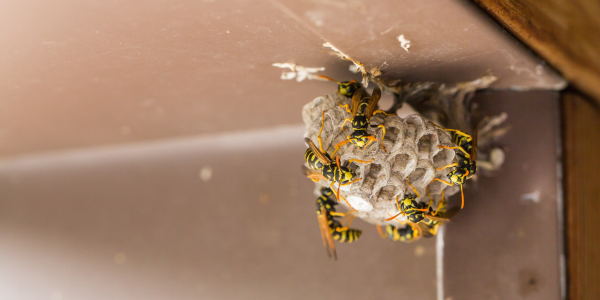
Summer activity outdoors often leads to nests on or near the house. Common spots include eaves, soffits, deck railings, and wall voids. Once a nest is established, knocking it down yourself can provoke the whole colony. That is a job better left to trained technicians.
Knockout Pest Control technicians complete more than 100 hours of classroom and in-the-field training, so they know how to remove nests safely and where to look for the ones you cannot see. Our treatments are GreenPro-certified and environmentally friendly, which matters when you are protecting a yard where kids and pets play.
If summer stinging insects have taken over your space in Nassau County, Suffolk County, Brooklyn, Queens, or anywhere across New York, we can knock them out for good. Knockout Pest Control has served the area since 1975 with 24-hour service, seven days a week. Call (800) 244-7378 or request a free estimate, and new customers get $50 off their initial service.