
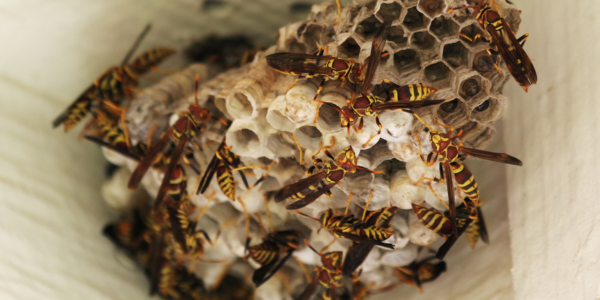
What Happens When You Ignore a Wasp Nest (Hint: It Doesn’t Go Away)
It’s a hot summer afternoon on Long Island. You’re grilling, enjoying your yard, and suddenly—buzzing. You spot a wasp nest tucked under the eaves of your roof, hanging from a tree branch, or maybe even hidden inside your kids’ playset. Your first instinct? Maybe it’ll just go away on its own.
But here’s the truth: ignoring a wasp nest doesn’t solve the problem. In fact, it almost always makes it worse!
At Knockout Pest Control, we’ve seen what happens when homeowners try to wait out a wasp nest. Spoiler: the colony grows, the stings get riskier, and your home becomes less safe. Let’s break down exactly why ignoring a wasp problem isn’t an option for Long Island homeowners.
Why Late Summer is Peak Wasp Season
Wasps are active throughout spring and summer, but August and September are when they become the biggest threat. Here’s why:
- Colony Growth: By late summer, wasp colonies have grown from a few dozen to thousands. The larger the nest, the more aggressive they become.
- Food Scarcity: As natural food sources decline, wasps scavenge for sweet drinks, proteins, and anything they can find around your yard. That’s why you see them hovering near garbage cans, picnic tables, and grills.
- Defensive Behavior: Wasps fiercely defend their nests. The closer it is to your home, deck, or yard, the more likely it is you’ll cross paths—and get stung.
What Happens if You Leave a Wasp Nest Alone
You might be tempted to think, “If I don’t bother them, they won’t bother me.” Unfortunately, that’s not how wasps work. Here’s what really happens when you ignore a nest:
1. The Wasp Colony Expands
A small paper nest the size of a golf ball can quickly grow into something much larger. By late summer, some wasp nests can contain 1,000+ wasps. That means more stings and more danger for your family.
2. They Get More Aggressive
As colonies grow, wasps become increasingly territorial. Walk too close to their nest, mow the lawn nearby, or simply sit in the wrong spot, and you could be targeted. Unlike bees, wasps can sting multiple times.
3. More Wasp Stings = More Health Risks
For anyone allergic to stings, even one encounter can be life-threatening. But even non-allergic people face swelling, pain, and in some cases, infections from repeated stings. Children and pets are at higher risk because they don’t always know to avoid nests.
4. Wasp Nests Spread to New Areas
Leave a nest unchecked, and by next season, you may have multiple wasp nests on your property. Wasps often establish new colonies in the same favorable environment year after year.
5. They Move Inside
Some wasps build nests inside walls, attics, and sheds. Ignore the warning signs long enough, and you may find them buzzing through vents or light fixtures inside your home.
Common Wasp Nest Locations on Long Island Homes
Long Island homeowners often find wasp nests in these spots:
- Under roof eaves and overhangs
- Inside outdoor grills or patio furniture
- In children’s playsets or swing sets
- Along fences, sheds, or garages
- Inside hollow tree trunks or shrubs
- Near attic vents or siding gaps
If you notice wasps flying in and out of the same area repeatedly, that’s usually a sign there’s a nest nearby.
Why DIY Wasp Removal Is Risky
A quick internet search might tell you to spray the nest at night or knock it down with a broom. But DIY wasp nest removal can be dangerous and ineffective.
- Aggressive Response: Disturbing a nest triggers wasps to swarm. A single person may be attacked by dozens at once.
- Hidden Nests: Spraying visible nests doesn’t always solve the problem. Wasps may have secondary nests or hidden colonies.
- Safety Hazards: Nests high in trees, under eaves, or inside attics require climbing ladders—risky when angry wasps are swarming.
- Temporary Fix: Store-bought sprays kill on contact but rarely eliminate the colony. The queen survives, and the nest rebuilds.
Professional Wasp Removal: The Smarter Fix
A wasp nest won’t disappear on its own. In fact, it only grows bigger, bolder, and more dangerous with time. If you’re seeing wasp activity around your Long Island home, the best step you can take is to call the professionals at Knockout Pest Control.
We serve homeowners across Nassau and Suffolk counties with safe, effective wasp and yellow jacket removal. Don’t spend the rest of your summer dodging stingers—let us handle it.
New customer? Save $50 on your first service this August.