
Bees vs. Wasps: How to Tell What’s Nesting Around Your New York Home This Summer
A loud buzz near the eaves, a few stingers circling the deck, a hole drilled neatly into the porch railing. Before you grab a can of spray, take a second to figure out what you are actually dealing with. Bees and wasps look similar from ten feet away, but they behave very differently, and the right response depends on which one moved in.
Quick Visual Differences
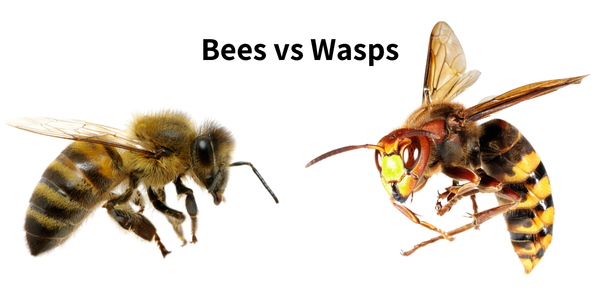
Bees are rounder, fuzzier, and dusty looking. They are usually some shade of golden brown or black with subtle yellow bands. Honey bees and bumble bees are the two most common across Long Island and NYC.
Wasps are sleek, shiny, and almost hairless. They have a narrow waist between the thorax and abdomen and brighter, sharper yellow markings. Yellow jackets, paper wasps, and bald-faced hornets are the species we see most across Nassau County, Suffolk County, Queens, and Brooklyn.
A quick rule: if it looks fuzzy and slow, lean bee. If it looks polished and fast, lean wasp.
Tell Me About the Nest
Nest shape is often the clearest giveaway.
- Honey bees build waxy combs inside hollow trees, wall voids, and chimneys. You will rarely see the actual nest, just heavy traffic at a single entry point.
- Bumble bees nest in the ground or in old rodent burrows, often under sheds or decks.
- Carpenter bees drill perfectly round half-inch holes into wood siding, fascia, and railings. One bee per hole.
- Paper wasps build small open-cell umbrella nests under eaves, doorframes, and grills.
- Yellow jackets build large enclosed nests in the ground, in wall voids, or in dense shrubs.
- Bald-faced hornets build big gray football-shaped nests hanging from tree limbs or roof lines.
Behavior in the Yard
Bees are focused on flowers. If the insects buzzing around your yard are working blossoms and ignoring your sandwich, they are almost certainly bees. They sting only when provoked, and honey bees die after stinging once.
Wasps are predators and scavengers. They are the ones at the picnic table, hovering over the trash can, or aggressively patrolling near a soda can. Most wasps can sting repeatedly, and yellow jackets and hornets defend their nests with serious force if anyone gets close.
Why the Difference Matters
Honey bees and bumble bees are valuable pollinators, and reputable pest pros try to relocate honey bee colonies when possible rather than treat them. Carpenter bees, while solitary, can do real damage to wood structures over time and need targeted treatment. Wasps and hornets are a sting risk first and a structural nuisance second, and their nests should not be approached by a homeowner once they reach softball size.
Our bee removal service, wasp control, and hornet treatments cover all of the above with the right method for each species.
Get a Pro Look Before Someone Gets Stung
Knockout Pest Control has handled stinging insects across Long Island, NYC, Westchester County, and Rockland County since 1975. Our GreenPro-certified technicians respond 24 hours a day, 7 days a week. New customers get $50 off the initial service. Call (800) 244-7378 or request a free estimate from Knockout Pest Control before the colony grows.